Choosing High-Cycle Door Hardware for Retail and Commercial Developments

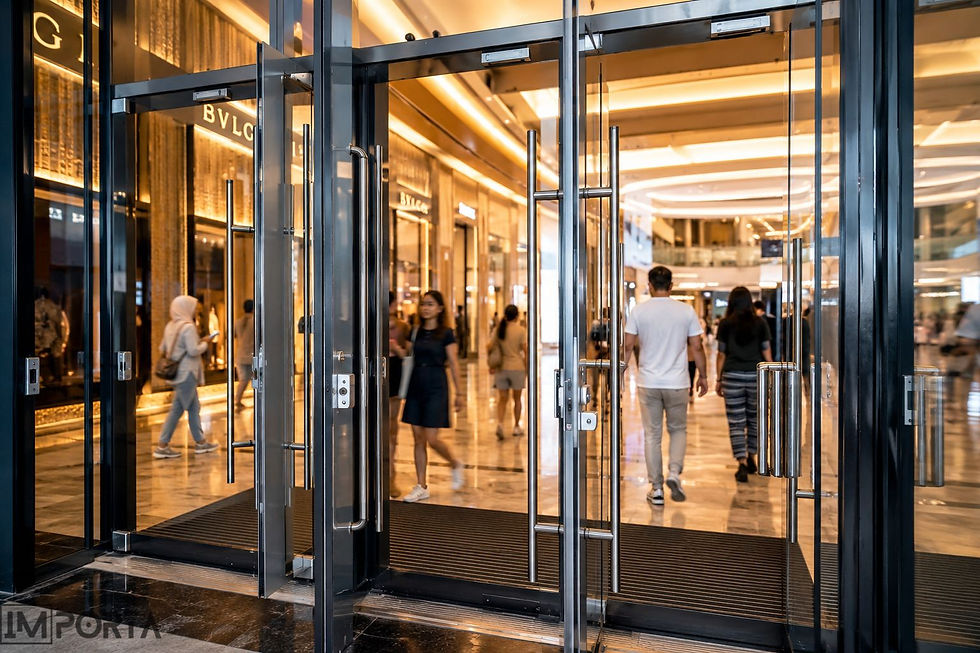
Retail and commercial environments place unique demands on door hardware. Unlike residential buildings, where doors may be used dozens of times per day, retail stores, shopping centers, supermarkets, and mixed-use developments can experience thousands of door cycles daily.
For developers and contractors in the UAE, selecting door hardware for these environments requires a performance-first approach. Hardware must not only support smooth operation but also withstand continuous use without compromising safety, appearance, or reliability.
Understanding the relationship between traffic intensity and hardware performance helps project teams make informed decisions that reduce maintenance requirements and improve long-term operational efficiency.
Why Do High-Traffic Commercial Spaces Require Specialized Hardware?
Question
Why can't standard door hardware be used in busy retail environments?
Direct Answer
Because commercial doors experience significantly higher usage levels that demand stronger, more durable hardware systems.
Detailed Explanation
Every time a door opens and closes, its hardware experiences mechanical stress. In a shopping mall, supermarket, or large retail store, this process repeats continuously throughout operating hours.
Standard hardware may function adequately during initial occupancy, but under constant usage, components can begin to wear prematurely.
Common consequences include:
Reduced operational smoothness
Loose hardware components
Door misalignment
Increased maintenance interventions
Commercial-grade hardware is specifically engineered to handle repetitive movement and prolonged use while maintaining consistent performance.
How Does Traffic Volume Influence Hardware Selection?
Question
Should hardware specifications change based on expected footfall?
Direct Answer
Yes. Door hardware should always be selected according to projected traffic intensity and operational demands.
Detailed Explanation
Different commercial spaces experience different traffic patterns.
For example:
Boutique Retail Stores
Typically experience moderate traffic with predictable usage patterns.
Shopping Mall Entrances
Handle continuous pedestrian flow throughout the day.
Supermarkets and Hypermarkets
Experience heavy movement involving both customers and equipment.
Entertainment Venues
Face peak traffic periods with concentrated usage.
The performance requirements for hinges, closers, locks, and access systems vary according on the environment.
Matching hardware specifications to actual traffic conditions improves longevity and operational consistency.
Why Is Cycle Performance an Important Consideration?
Question
What is cycle performance and why does it matter?
Direct Answer
Cycle performance refers to the number of operational cycles hardware can withstand while maintaining reliable functionality.
Detailed Explanation
Door hardware is often tested and rated according to its operational endurance.
Higher cycle ratings generally indicate:
Better durability
Greater reliability
Reduced maintenance frequency
Longer service life
Choosing hardware intended for heavy use in commercial installations helps lower unanticipated failures after occupancy.
Developers who focus only on initial procurement costs often overlook the financial benefits of higher-performing hardware over the building lifecycle.
How Does Hardware Reliability Affect Building Operations?
Question
Can hardware performance impact daily business operations?
Direct Answer
Absolutely. Reliable hardware supports uninterrupted movement throughout commercial spaces.
Detailed Explanation
Door systems influence how people move through buildings.
When hardware performs consistently:
Customer flow remains smooth
Access points operate efficiently
Staff experience fewer operational disruptions
Maintenance teams spend less time on repairs
Conversely, recurring hardware issues can affect both user experience and operational efficiency.
In busy commercial environments, even minor door problems can quickly become noticeable.
What Materials Are Best for High-Use Commercial Doors?
Question
Which materials provide better long-term performance in retail environments?
Direct Answer
Durable, corrosion-resistant materials generally offer the best performance under heavy usage conditions.
Detailed Explanation
Retail doors are constantly in contact with people and the environment.
Preferred hardware materials often include:
Stainless steel
High-performance metal alloys
Corrosion-resistant components
Durable protective finishes
In the UAE, hardware may also face dust exposure, humidity fluctuations, and frequent cleaning procedures.
Selecting durable materials helps preserve both functionality and appearance over time.
Why Is Maintenance Planning Important During Hardware Specification?
Question
Should maintenance considerations influence hardware selection?
Direct Answer
Yes. Maintenance requirements should be considered before hardware is specified.
Detailed Explanation
Many hardware decisions focus exclusively on installation and aesthetics.
However, long-term maintenance costs often exceed initial procurement savings.
Developers should evaluate:
Serviceability
Component replacement availability
Adjustment requirements
Expected maintenance intervals
Hardware designed for easier maintenance can significantly reduce lifecycle operational costs.
This is particularly important for large retail developments where hundreds of doors may be in operation simultaneously.
How Can Contractors Improve Installation Outcomes?
Question
What role does installation quality play in hardware performance?
Direct Answer
Proper installation is essential for achieving the intended performance of any hardware system.
Detailed Explanation
Even premium hardware cannot compensate for poor installation practices.
Contractors should ensure:
Accurate door alignment
Proper hinge positioning
Correct closer adjustment
Secure fixing methods
Complete operational testing
Small installation errors can create ongoing performance issues regardless of hardware quality.
Attention to detail during installation helps maximize hardware lifespan and reliability.
Common Specification Mistakes in Retail Projects
Several mistakes frequently reduce hardware performance in commercial environments.
Common issues include:
Selecting hardware based only on appearance
Underestimating traffic levels
Delaying hardware planning until late project stages
Ignoring future maintenance requirements
Using inconsistent specifications across similar door types
Avoiding these mistakes helps improve project outcomes and reduce operational challenges after handover.
Lessons from UAE Commercial Developments
Across retail and mixed-use projects in the UAE, long-term performance often depends on decisions made during the specification phase.
Projects that prioritize durability, operational efficiency, and lifecycle value generally experience:
Lower maintenance costs
Better user experience
Reduced operational disruptions
Longer hardware service life
Meanwhile, projects that prioritize short-term cost savings frequently encounter higher maintenance demands and earlier hardware replacement requirements.
This demonstrates why hardware should be viewed as a long-term investment rather than a finishing detail.
Final Thoughts
Door hardware plays a vital role in the success of retail and commercial developments. In environments where doors operate continuously throughout the day, performance, durability, and reliability become critical considerations.
For developers and contractors in the UAE, selecting hardware based on lifecycle performance rather than initial cost alone helps improve operational efficiency and reduce long-term maintenance requirements.
When traffic demands, installation quality, material durability, and maintenance planning are considered together, commercial door systems can continue performing effectively for many years after project completion.


Comments